blog

Blog

Home

Blog

  • Why Wall-Mounted Scent Diffusers Are a Smart Choice for Modern Commercial Spaces
    Aug 25, 2026
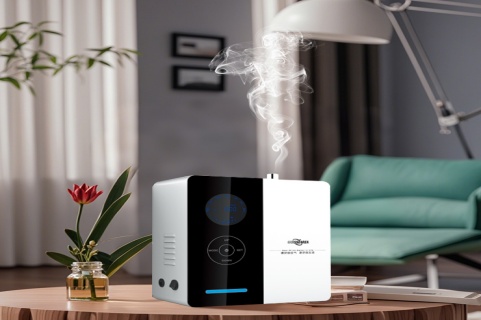
    Introduction   A well-designed commercial space is about more than what customers can see. The atmosphere,  comfort and overall sensory experience can also influence how people perceive a hotel,  retail store, office or other business environment. For businesses looking for a practical way to introduce fragrance without taking up valuable floor space, the HYS-501F  Wall-Mounted Automatic Scent Diffuser offers a compact and flexible solution. With a 400ml oil capacity, wall-mounted installation, automatic cycle operation and coverage of 500–1000 CBM, it is designed for scenting applications where space efficiency and consistent operation matter. 1. Save Valuable Floor Space with a Wall-Mounted Design   Commercial interiors often need to balance equipment requirements with aesthetics and available space. A traditional floor-standing diffuser may require a dedicated area on the floor, while a tabletop unit needs an appropriate counter, shelf or other surface. A wall-mounted scent diffuser takes a different approach. By positioning the device on the wall, businesses can keep floors and countertops available for their primary functions. This can be particularly useful in hotels, offices, retail environments and other commercial spaces where every part of the interior has a purpose. The HYS-501F is designed for wall-mounted installation while also supporting lay-flat placement. This gives businesses more flexibility when deciding how the diffuser should be positioned within a particular space.   2. Automatic Scenting Makes Daily Operation Easier   One of the main reasons businesses use professional scenting equipment is to make fragrance management more consistent and less dependent on manual operation. The HYS-501F features an automatic cycle and timing function, allowing the diffuser to operate according to a preset schedule rather than requiring users to repeatedly turn the machine on and off. The available control options include manual button control and Bluetooth operation, depending on the selected configuration. This type of automated operation can be useful for commercial environments with defined operating hours. A hotel, for example, may want scenting during guest-facing periods, while a retail store may prefer fragrance operation during opening hours. Automation also gives businesses a more practical way to manage fragrance consumption. Instead of relying on continuous manual operation, the diffuser can work according to the selected cycle or schedule.   3. Flexible Power Options for Different Installation Conditions   Power availability is often overlooked when selecting a wall-mounted scent diffuser. Some locations have easy access to an electrical outlet, while others may not. A diffuser that offers greater power flexibility can therefore simplify installation planning. The HYS-501F is listed with a DC 12V power supply and 8W power rating, while its product specifications also indicate that batteries are included. This combination gives businesses more flexibility when considering where the diffuser can be installed. Instead of choosing the installation position solely according to the location of a power outlet, buyers can evaluate the space, wall position and scenting requirements together.   4. A 400ml Capacity for Less Frequent Refilling   The HYS-501F has a 400ml essential oil capacity, which is considerably larger than many compact personal-use aroma diffusers. The product is also designed with a visible oil setup, allowing users to check the fragrance supply more conveniently. A larger reservoir does not mean that every installation will have the same refill interval. Actual oil consumption depends on factors such as operating schedules, fragrance intensity and usage conditions. However, a 400ml capacity gives commercial buyers more room to configure the diffuser for regular operation without relying on a very small fragrance reservoir.   5. Designed for Medium-Sized Commercial Scenting Applications   Commercial spaces vary significantly in size, layout and airflow conditions, which directly influence fragrance performance. With a coverage range of 500–1000 CBM, the HYS-501F is designed for medium-sized applications such as offices, retail spaces, hotels and other commercial areas that require consistent scent distribution. Coverage specifications provide an estimated reference range, while actual fragrance performance depends on factors such as room structure, ventilation and air circulation.This makes proper placement and application planning important when integrating a scent diffuser into a commercial space. The HYS-501F operates at less than 42 dBA, making it suitable for customer-facing environments where low operating noise is preferred.   6. Where Can a Wall-Mounted Scent Diffuser Be Used?   Wall-mounted scent diffusers offer a practical option for businesses that need consistent fragrance while preserving floor and counter space. The HYS-501F is designed for applications such as hotels and other commercial spaces, while Heyu's scenting solutions are used across various environments including retail stores, restaurants, lobbies and hospitality venues. Hotels Hotels often focus on creating a consistent atmosphere across reception areas, corridors, lounges and other guest-facing spaces.  In areas where maintaining a clean and organized layout is important,this installation approach provides continuous fragrance without taking up valuable floor or tabletop space. Retail Stores Retail spaces often prioritize product displays, customer flow and visual presentation. The space-saving design helps introduce fragrance without interfering with merchandising areas or customer movement. Offices In office environments, scenting is often integrated into reception areas, meeting rooms and common spaces rather than individual workstations.  Its discreet design helps maintain a comfortable atmosphere without adding extra equipment to desks or shared areas. Lobbies and Public Areas Lobbies and reception areas are often important parts of a customer's first impression. In these areas, scenting works alongside lighting, interior design and other sensory elements to create a more consistent visitor experience.   7. Wall-Mounted vs. Floor-Standing Scent Diffusers   Different commercial spaces may require different scenting solutions depending on installation conditions, coverage needs and layout preferences. Wall-mounted diffusers are often preferred in environments where keeping floors and surfaces available is important, such as hotels, retail stores and offices. Their fixed installation position helps integrate scenting equipment into the existing space without affecting daily operations. Floor-standing diffusers are typically considered for larger areas where higher fragrance output or a standalone scenting unit is required. They are more suitable when sufficient floor space is available and the equipment itself can become part of the overall space planning.   8. Key Factors for Commercial Scent Diffuser Selection   When evaluating a scent diffuser for commercial applications, buyers typically need to consider several factors beyond the product appearance, including: Coverage requirements: Match the diffuser's coverage range with the size, layout and airflow conditions of the space. Installation flexibility: Consider whether the location provides suitable power access and whether wall-mounted installation fits the environment. Operating features: Automatic scheduling, capacity and noise level all influence daily management and user experience. Maintenance needs: Easy access for refilling and routine maintenance helps improve long-term usability.   HYS-501F: A Practical Wall-Mounted Scenting Solution   For businesses that need a compact commercial scenting solution, the HYS-501F brings several practical features together in one design. Its 400ml oil capacity, 500–1000 CBM coverage, automatic cycle operation, timing function, wall-mounted installation and <42dBA operating noise make it suited to commercial scenting applications where space efficiency and straightforward operation are important. The unit uses a PP plastic housing and is specified for DC 12V/8W operation. The unit is also designed to meet relevant safety and compliance requirements, with CE, RoHS, UL, EMC and LVD certifications listed.   Conclusion   Modern commercial spaces often require equipment that delivers performance while maintaining a clean and efficient layout. For businesses with limited floor space, this approach offers a practical balance between installation efficiency, automated operation and fragrance capacity. The HYS-501F combines these advantages with a 400ml reservoir, 500–1000 CBM coverage, automatic timing and flexible installation options. Designed for hotels, retail stores, offices and other commercial spaces, it provides a space-efficient way to integrate fragrance without requiring dedicated floor space. If you are sourcing wall-mounted scent diffusers for commercial projects, distribution or private-label applications, Heyu supports OEM/ODM solutions and can provide product customization based on your business requirements.   FAQ   Is the HYS-501F suitable for hotels and retail stores? Yes. With a 500–1000 CBM coverage range and wall-mounted design, the HYS-501F is suitable for commercial environments such as hotels, retail stores, offices and other spaces where efficient use of space is important.   Can the HYS-501F work without a fixed power outlet? The HYS-501F supports flexible installation options with DC 12V power supply and battery operation, allowing businesses to consider more installation locations.   How often does the diffuser need to be refilled? Refill frequency depends on operating schedules, fragrance intensity and usage conditions. The 400ml oil capacity helps reduce the need for frequent refilling in regular commercial operation.   Does Heyu provide OEM/ODM services for this model? Yes. Heyu supports OEM/ODM customization for scent diffuser products, including solutions based on different branding and business requirements.
    View More
  • Retail Store Fragrance Marketing Guide: How to Make Customers Remember Your Brand Scent
    Aug 24, 2026
    What Is Retail Store Fragrance Marketing?   A Clear Definition Retail store fragrance marketing is the planned use of scent in physical retail spaces to reinforce brand identity and influence customer behavior. It goes beyond making a store "smell nice" and turns scent into a deliberate part of the brand experience. More Than Just a "Nice Smell" Many stores already have some kind of background scent, but few treat it as a real marketing tool. General "store scent" is often random, inconsistent, or chosen only because it smells pleasant. Retail fragrance marketing, by contrast, is aligned with your brand personality, target customer, and overall experience strategy. The goal is not just a good smell, but a recognizable brand scent that customers associate with your store long after they leave.   Why Scent Matters in Retail?   The Psychology of Scent and Memory Scent has a direct connection to the parts of the brain that handle emotion and memory. While visual and auditory signals are processed consciously, scent often works below the surface. Customers may not actively notice your store's fragrance, but they will remember how it made them feel. Over time, that feeling becomes linked to your brand. A thoughtful retail store fragrance marketing strategy can deliver several tangible benefits: Longer dwell time: Customers tend to stay longer in spaces that feel comfortable and inviting. Higher perceived value: A well-curated scent can make products and interiors feel more premium. Stronger brand recall: A consistent brand scent helps customers recognize your store even without seeing the logo. Potential lift in conversion and average order value: When customers feel relaxed and positive, they are more likely to buy and to spend more. A consistent brand scent can turn a store visit into a multi-sensory memory that customers associate with your brand long after they leave.   Who Should Invest in Retail Fragrance Marketing?   Retail fragrance marketing is especially powerful for brands where experience and image matter: - Fashion and apparel boutiques   - Beauty and cosmetics stores   - Home, lifestyle, and concept stores   - Jewelry and accessories   - Flagship stores and experience centers   These categories often rely on emotional connection and brand storytelling, which scent can reinforce in a subtle but effective way.   When It May Not Be a Priority (Yet)   Scent is not always the right first investment. It may make sense to focus on other elements of the customer experience before building a full fragrance program if: - You run a very short-term pop-up with a lifespan of only a few days.   - Your product category has strong inherent smells (some food concepts, specialty grocery, etc.) where added fragrance could conflict.   - Your space has strict ventilation, safety, or health constraints that limit diffuser use.   - Your brand is still defining its visual identity, tone of voice, and core positioning. In these cases, a light, neutral background scent or no scent at all may be more appropriate than a full fragrance marketing program. You can also start with a small pilot in one location before expanding your fragrance strategy.   Step-by-Step: Building Your Retail Brand Scent   Step 1 – Clarify Your Brand Identity and Target Customer Before choosing a scent, define your brand personality and primary customer. What three words describe your brand? What emotion should customers feel when they walk in? Your scent should feel like a natural extension of your visual identity and service style.   Step 2 – Choose the Right Scent Family and Notes Most retail-friendly fragrances fall into a few broad families: fresh / citrus, floral, woody, amber / oriental, and clean / linen. Match the scent family to your brand positioning. A minimalist fashion brand might choose a light woody-citrus blend, while a luxury beauty store may opt for a soft floral-amber composition.   Step 3 – Decide on Custom vs. Off-the-Shelf Scent You can start with curated off-the-shelf scents for faster, lower-cost testing, or invest in a custom brand scent for stronger differentiation. For a single store or pilot, off-the-shelf is often practical. For multi-location chains or long-term brand building, a custom scent can become a unique brand asset.   Step 4 – Select the Right Diffusion System Choose a system that fits your store size and layout: standalone diffusers for small boutiques, multiple units or wall-mounted devices for medium stores, and HVAC-integrated or central systems for large flagships. When evaluating options, look for a true commercial scent diffuser machine designed for continuous operation and multi-store management.   Step 5 – Design the Scent Journey Across the Store Treat scent as part of the customer journey. Use a slightly more noticeable scent at the entrance, a consistent and supportive level in the main shopping area, a softer touch in fitting or trial zones, and a clean, pleasant finish near checkout. Avoid letting different areas smell like different stores.   Step 6 – Set Intensity, Timing and Operational Rules Define clear operating rules: the scent should be "felt, not identified," run mainly during business hours, and be easy for staff to maintain. Assign responsibility for refills and basic checks, and train your team to notice when the scent is too weak or too strong.   Where Should You Place a Scent Diffuser in a Retail Store?   Placement determines whether your brand scent feels subtle and consistent or too strong and uneven. Use the following guidelines to position commercial scent diffusers across different zones.   Entrance / Welcome Zone Place a diffuser within 1–3 meters of the door so customers notice the scent as soon as they enter, but avoid pointing the nozzle directly at the doorway. For small to medium stores, a standalone or wall-mounted unit is usually enough; for large flagships, consider integrating scent into the HVAC system to create a consistent "scent curtain."   Main Shopping Area Aim for even, subtle coverage. For stores up to 200–300 m², one well-positioned commercial diffuser may be sufficient. For larger spaces, use multiple units spaced evenly to avoid "scent hot spots" and unscented corners. Keep devices away from strong air currents that can dilute the fragrance too quickly.   Fitting Rooms and Trial Zones Customers spend more time in these areas, so the scent should be softer and more neutral. Use a lower intensity setting or a smaller-capacity diffuser. In beauty and fragrance retail, ensure the ambient scent supports the brand atmosphere without interfering with product testing.   Checkout and Exit Area Maintain a clean, pleasant scent level here to reinforce a positive "exit memory." You can use the same fragrance as the entrance and main area, but at a slightly lower intensity. Avoid placing large or noisy diffusers right next to the cash register.   Areas to Avoid Do not position diffusers directly facing long-stay seating, strong ventilation outlets, food zones, or very small enclosed rooms with poor ventilation, as scent can become intrusive or uncomfortable.   Matching Placement to Store Size Small boutiques (under 100 m²) often need only one standalone unit near the entrance or in the center of the main area. Medium stores (100–500 m²) benefit from 2–4 strategically placed units or a simple HVAC solution. Large flagships and multi-zone stores (500 m²+) should consider a central HVAC-integrated system with zone control, supported by additional standalone units in key areas. Standalone diffusers are plug-and-play and easy to relocate, making them ideal for pilots and single locations, while HVAC systems provide uniform, centralized scent control for larger and multi-site stores. For multi-location retailers, choosing a commercial scent diffuser machine with remote or app-based control can simplify intensity adjustment, scheduling, and maintenance across all stores. The best placement strategy depends on the type of scent diffusion system you choose. Standalone commercial diffusers and HVAC-integrated systems each have their own strengths and ideal use cases. Understanding the differences can help you decide which solution fits your store size, layout, and budget.   Common Mistakes to Avoid   One of the most common mistakes in retail fragrance marketing is using too much scent. A fragrance that is too strong can feel intrusive and negatively affect the customer experience. Consistency is equally important—different stores, shifts, or days should not smell noticeably different. Aim for "always on, always subtle, always recognizable."   Scent That Conflicts With the Product Fragrance does not work equally well in every retail environment. It may conflict with products that already have strong scents, such as perfumes, skincare, or food-related products. In these spaces, choose a neutral fragrance or limit scenting to specific areas.   Ventilation and Safety Good ventilation and appropriate fragrance oils are essential, especially in small or enclosed spaces. Choose fragrance oils designed for commercial use and make sure the scent remains comfortable for staff who spend long hours in the space.   Retail Fragrance Marketing Checklist   Use this checklist to confirm that your retail store fragrance marketing is set up correctly: Defined your brand personality, target customer, and desired in-store emotion Selected a scent profile that fits your brand, product category, and store environment (ventilation, safety, and space constraints) Chosen a commercial scent diffuser based on store size, layout, operating hours, and coverage requirements Set consistent scent intensity, operating schedules, and maintenance responsibilities Established simple metrics to track impact, such as customer feedback, dwell time, sales trends, and scent consumption Confirmed that the system can support consistent scent management across multiple locations   FAQ   What is retail store fragrance marketing? Retail store fragrance marketing is the planned use of scent in physical retail spaces to reinforce brand identity and influence customer behavior. Instead of simply making a store "smell nice," it turns fragrance into a consistent brand asset that supports the overall customer experience and helps customers remember your store.   How many scent diffusers do I need for my store? The number of diffusers depends on your store size, layout, and ceiling height. As a rough guide: small boutiques (under 100 m²) often need only one standalone unit; medium stores (100–500 m²) may require 2–4 strategically placed units; large flagships and multi-zone stores (500 m²+) typically benefit from a central HVAC-integrated system with zone control, supported by additional standalone units in key areas. A professional supplier can help you calculate coverage based on your floor plan.   Can commercial scent diffusers be connected to HVAC systems? Yes. Many commercial scent diffusers are designed to integrate with HVAC systems, distributing fragrance through existing air ducts for uniform, whole-store coverage. HVAC-integrated solutions are especially suitable for medium to large stores, department stores, shopping malls, and multi-location chains that need consistent scent control across many sites.   How often do I need to refill fragrance oil? Refill frequency depends on the diffuser model, oil capacity, operating hours, and intensity setting. For most commercial units running during standard business hours, refills are typically needed every 2–6 weeks. Systems with larger oil capacity or lower daily run times can extend this interval. Your supplier can recommend a refill schedule based on your specific usage scenario.   Do you offer custom scents or OEM/ODM for scent machines? Yes. Experienced scent machine manufacturers often support custom fragrance development, private-label branding, and OEM/ODM services for hardware. This allows retailers and distributors to create a differentiated brand scent and tailor device appearance, packaging, and functionality to their market. If you are building a long-term brand or multi-store program, a custom scent and co-branded hardware can become a unique brand asset.   How long does it take to implement a scent marketing program? For a single-store pilot with off-the-shelf fragrance and standalone diffusers, implementation can often be completed within 1–2 weeks, including device shipping, installation, and initial testing. For larger projects involving HVAC integration, custom scents, or multi-location rollouts, the timeline may extend to 4–8 weeks or more, depending on design, production, and installation requirements. Starting with a small pilot helps you refine the scent, intensity, and operating rules before scaling to additional locations.   Next Steps: From Guide to Implementation   If you're ready to move from idea to action, start with a small, controlled pilot rather than a full chain rollout. Choose one representative store, define a clear trial period (for example, 4–8 weeks), and agree on simple success metrics such as customer feedback, staff impressions, and basic sales or dwell-time trends. Use this pilot to refine your scent, intensity, and operating rules before scaling to additional locations. As you scale from a single pilot store to multiple locations, the right commercial scent diffuser machine and central control system will become key to maintaining a consistent brand scent across all stores.Working with an experienced scent marketing partner such as Scentop can simplify equipment selection, fragrance testing, and OEM/ODM customization, while ensuring reliable performance across different store types and regions. Whether you need standalone diffusers for boutiques or HVAC-integrated solutions for flagships, a professional supplier can help you design a scalable scent program that grows with your brand.
    View More
  • Beyond the Sticker Price: Calculating the TCO for Commercial Scenting Systems
    Beyond the Sticker Price: Calculating the TCO for Commercial Scenting Systems
    Apr 16, 2026
    Focusing only on sticker price can lead to costly mistakes in scenting system procurement. Many facility managers overlook hidden costs that impact the total cost of ownership. Industry reports reveal frequent expenses such as fragrance oil subscriptions and bespoke scent development, which often reach thousands over time.     Cost Type Estimated Cost Range Entry-level commercial scent diffusers Starting at £300 Subscription-based fragrance oil programmes £50 to £200 per month Bespoke signature scent development Typically in the thousands   A comprehensive approach considers acquisition, operational, and direct impact on commercial diffuser maintenance costs, helping businesses make smarter investment decisions and avoid unexpected financial burdens.   Understanding Total Cost of Ownership     What TCO Means for Scenting Systems   Total cost of ownership represents the complete financial picture of a scenting system throughout its lifecycle. This concept extends beyond the initial purchase price. It includes every cost associated with acquiring, operating, and maintaining the system. Facility managers often focus on upfront expenses, but true ownership involves a broader perspective.   A comprehensive approach to ownership considers all direct and indirect costs. These include acquisition, operations, and hidden expenses that may not be obvious at first glance. The table below outlines the main components that make up the total cost of ownership for commercial scenting systems:   Component Type Description Acquisition Purchase price, implementation, training Operations Maintenance, energy, labor, consumables Hidden Costs Downtime, compliance, disposal, opportunity cost   Understanding these categories helps decision-makers avoid underestimating the long-term financial impact of their investment.   Why TCO Matters More Than Price   Focusing solely on sticker price can lead to costly mistakes. Many organizations discover that low-cost devices often come with higher maintenance or energy expenses. Over time, these hidden costs can surpass the initial savings. Google search trends show that buyers increasingly seek information about hidden costs and informed purchasing decisions, highlighting the need for a thorough evaluation.   Direct and indirect costs accumulate over the lifespan of a scenting system. For example, raw material costs can account for up to 75% of total expenses, while utility costs may add another 10%. These figures demonstrate that operational and hidden costs play a significant role in the total cost of ownership.   Tip: Always request a detailed cost breakdown from vendors. This practice ensures transparency and helps you compare systems accurately.   A clear understanding of total cost of ownership empowers facility managers to make smarter, long-term decisions. It transforms a simple purchase into a strategic investment in the quality and efficiency of your commercial environment.   Breaking Down TCO Components   Acquisition Costs   Acquisition costs represent the initial investment required to deploy a commercial scenting system. These expenses include the purchase price of the device, installation, and any necessary training for staff. The market offers a wide range of options, from entry-level ultrasonic diffusers to professional commercial scent diffuser machines designed for large-scale integration. The following table illustrates the estimated acquisition costs for popular commercial scenting models:   Model Estimated Cost (USD) Prolitec ScentAir Pro $5,000–$30,000+ ScentAir Commercial Micro $1,200–$8,000 AromaTech AroMini Pro $400–$2,500 Air Aroma Cloud Series $3,000–$40,000+ ScentBOX Enterprise $30–$250/month Saintdeland Dual-Fluid Atomizer $800–$12,000 Aromatech HVAC Inline $2,000–$25,000+ Nebulizing Dispenser X $150–$1,000 Smart Diffuser Pro $500–$6,000 EcoScent Commercial $600–$4,000   Ultrasonic diffusers typically have a lower acquisition cost, ranging from $35 to $180, while advanced scenting devices fall between $120 and $450. However, the initial price does not reflect the full financial commitment. Facility managers must consider the long-term implications of their choice, as lower upfront costs can lead to higher expenses over time due to increased maintenance and consumable requirements.   Tip: Always evaluate acquisition costs in the context of the system’s expected lifespan and compatibility with your facility’s infrastructure.   Operational Costs and Energy Use   Operational costs encompass all ongoing expenses related to running a scenting system. These include energy consumption, fragrance oil usage, labor for refills and maintenance, and the impact of system downtime. The Scentop ST-01EH stands out in this category due to its advanced features designed to minimize operational expenses.   Feature Description Energy-efficient airflow <0.6kWh/day energy consumption Capacity 8,000-10,000m³ for large spaces Noise level Ultra-quiet ≤45dB Control Smart Bluetooth App control Maintenance Low-maintenance scenting solution   The ST-01EH’s energy efficiency directly reduces electricity costs. For example, a commercial complex operating 50 units would consume less than 30kWh per day (0.6kWh x 50). At an average electricity rate of $0.12 per kWh, the daily energy cost totals $3.60, or approximately $1,314 annually. Competing devices with higher consumption can double or triple this figure, significantly impacting the total cost of ownership.   The large 1000ml reservoir and smart auto-sensing technology further reduce operational costs. Fewer refills mean less labor and lower risk of downtime. The auto-sensing feature ensures fragrance is only released when the HVAC system is active, preventing oil waste and unnecessary energy use. These innovations make the ST-01EH an ideal Energy-Saving Aroma Diffuser for large-scale applications.   Note: Smart controls and high-capacity reservoirs can cut labor costs by up to 40% compared to traditional systems, according to technical consultants in the scenting industry. Hidden and Indirect Costs Hidden and indirect costs often escape notice during procurement but can have a substantial impact on the total cost of ownership for any commercial HVAC scent system. These costs include labor for frequent maintenance, downtime due to system failures, compliance with safety and environmental regulations, and the expense of service contracts.   Cost Factor Multi-Nozzle Machines Single-Nozzle Machines Initial Purchase Higher Lower Installation Costs Higher Lower Refill Frequency Lower Higher Maintenance Labor Higher Lower Service Contracts More Comprehensive Less Comprehensive   Low-cost ultrasonic devices may appear attractive at first glance. However, they often require frequent refills and generate more oil waste, leading to increased labor and higher overall cost. Downtime from maintenance interruptions can disrupt business operations and reduce customer satisfaction. Compliance failures can result in fines or forced upgrades, further increasing the total cost of ownership.   Risk Scenario: An engineer from a major retail chain reported that switching from low-cost ultrasonic diffusers to advanced, energy-efficient models reduced annual maintenance labor by 30% and cut unplanned downtime by half.   Facility managers should always assess the full spectrum of direct, operational, and hidden costs before making a purchasing decision. This comprehensive approach ensures long-term value and reliability for any commercial scenting investment.   Commercial Diffuser Maintenance Cost Analysis     Maintenance Frequency and Labor   Maintenance frequency plays a critical role in determining the commercial diffuser maintenance cost for large facilities. Traditional scenting systems often require frequent attention, with staff needing to refill small reservoirs every few weeks. This increases labor hours and disrupts daily operations. In contrast, advanced models like the Scentop ST-01EH feature a 1000ml reservoir and airflow auto-sensing technology. These innovations allow employees to shift from monthly to quarterly refill schedules, significantly reducing labor demands. Smart HVAC diffusers enable a 'set it and forget it' approach. Routine tasks include checking oil levels, cleaning exteriors, and inspecting nozzles, which are infrequent and straightforward. Large-capacity reservoirs support bulk essential oil efficiency, minimizing refill frequency and maximizing operational uptime.   Technical consultants report that smart features can lower maintenance costs by up to 40%. This reduction translates to fewer interruptions and improved productivity for facility teams.   Tip: Investing in a diffuser with auto-sensing and high-capacity reservoirs can cut labor hours and reduce the risk of unplanned downtime.   Consumables and Refill Intervals   Consumable expenses and refill intervals directly impact the commercial diffuser maintenance costs. Traditional systems often require monthly refills, leading to higher ongoing costs. Smart diffusers, such as the Scentop ST-01EH, optimize oil usage and extend refill intervals, supporting bulk essential oil efficiency.   Scenting System Refill Interval Cost per Refill Metered Aerosol Systems ~30 days $5 - $7 Plug-in Scented Oil Warmers 30 - 90 days $2.50 - $6.00 Scentop ST-01EH 90 days (avg.) Lower per refill   Innovative features like adaptive motion sensors and AI-driven analytics further reduce waste and improve efficiency. Low-power consumption also contributes to lower maintenance costs over time. Real-world examples show that facilities using smart diffusers experience fewer service calls and lower consumable expenses.   Risk Scenario: A retail manager observed that switching to a smart diffuser reduced refill frequency by 50%, resulting in substantial savings on labor and consumables.   Facility managers should evaluate commercial diffuser maintenance cost not only by initial price but by long-term savings from reduced labor and optimized consumable use.   Calculating TCO for Smart Purchasing   Estimating Each Cost Category   Accurate calculations of total cost of ownership begin with a structured approach. Facility managers should break down each cost category to avoid surprises. Use the following checklist to guide your calculations: Acquisition: Record the purchase price, installation, and training costs. Operational: Estimate annual energy use, fragrance oil consumption, and labor for routine maintenance. Maintenance: Calculate the frequency and cost of service visits, replacement parts, and recalibration. For example, annual recalibration can reach 30% of the initial hardware cost if the system lacks self-calibrating features. Hidden and Indirect: Include costs from downtime, compliance, and disposal. Consider opportunity costs if the system disrupts business operations.   Tip: Document all calculations in a spreadsheet for transparency and future reference.   A thorough review of each category ensures that ownership calculations reflect the true financial impact over the system’s lifecycle.   Using TCO for Vendor Comparison   Comparing scenting system vendors requires more than a glance at the sticker price. Calculations should include both direct and indirect costs to reveal the best long-term value. The table below highlights key factors that influence ownership calculations:   Factor Description Calibration and Maintenance Costs Annual recalibration may reach 30% of hardware cost. Self-calibrating systems reduce this. Interoperability Issues Proprietary systems can increase integration costs and limit future upgrades.   Consider a real-world example. A large office complex installs 20 Scentop ST-01EH units. Each unit uses less than 0.6kWh per day, resulting in an annual energy cost of about $87 per unit. The large reservoir and auto-sensing features reduce refill and labor costs by up to 40%. Over five years, calculations show that the total cost of ownership for Scentop is significantly lower than for systems with higher maintenance and energy demands.   Note: Technical consultants recommend reviewing vendor support, warranty terms, and compatibility with existing infrastructure as part of your calculations.   Smart purchasing decisions rely on detailed calculations and a clear understanding of ownership costs. This approach helps avoid procurement pitfalls and ensures a reliable, cost-effective scenting solution.   Avoiding Common Procurement Mistakes   The Low-Cost Device Trap   Facility managers often fall into the trap of selecting low-priced ultrasonic scenting devices. These units promise immediate savings, but their hidden drawbacks quickly become apparent. Maintenance teams report that cheaper devices require frequent refills and generate excessive essential oil waste. This leads to increased labor hours and operational interruptions. Experts note that using lower-quality lubricants or oils can compromise equipment protection, resulting in more repairs and unexpected breakdowns. Over time, these issues drive up replacement part expenses and service costs.   A real-world scenario illustrates this risk. At an oil refinery, poor maintenance practices caused 30 pumps to fail within a year. After improving maintenance routines, the mean time between failures tripled, and repair costs dropped by more than 75%. This example demonstrates how frequent maintenance and oil waste can escalate the total cost of ownership for scenting systems.   Operators who focus solely on sticker price often overlook rising energy costs and ongoing maintenance demands. Equipment purchased based on initial price can accumulate thousands of dollars in extra operational costs within six months, offsetting any upfront savings.   Tip: Always evaluate refill frequency, oil quality, and maintenance requirements before choosing a scenting system. Short-term savings may lead to long-term financial burdens.   Overlooking Long-Term Costs   Procurement mistakes extend beyond device selection. Many buyers ignore essential factors such as supplier reliability, product consistency, and commercial viability. The following table highlights common errors and their implications:   Mistake Description Implication for Procurement Developing products in isolation Poor structure and packaging decisions Relying solely on good samples Inconsistent quality and confusion Focusing on aesthetics Overlooks cost and performance factors Neglecting supplier reliability Risks product consistency and performance Ignoring market cost tolerances Misaligned offerings and pricing strategies   Long-term value requires careful evaluation of price structures, oil quality standards, and subscription models. Studies show that investing in scenting systems can enhance customer satisfaction and reduce return rates, providing benefits beyond initial cost. Buyers should document all expenses and compare systems based on total cost of ownership, not just sticker price.   Note: Consult technical experts and review vendor support before making a final decision. Reliable systems with efficient maintenance routines deliver greater value over time.   Facility managers must look beyond sticker price and evaluate total cost of ownership for scenting systems. Smart solutions like Scentop ST-01EH deliver proven benefits: Set it and forget it' operation reduces maintenance. Large-capacity bottles minimize refill frequency, lowering upkeep cost. Automated dispersal cuts labor cost and boosts efficiency.   Industry case studies show luxury hotels and spas achieve higher satisfaction and operational savings with comprehensive TCO analysis.   Facility Type TCO Impact Hotel 20% lower maintenance cost Spa 15% higher customer satisfaction   Use a TCO checklist to compare systems and secure long-term reliability.   Calculating the Total Cost of Ownership is about transforming a routine purchase into a strategic facility investment. By factoring in energy efficiency, maintenance labor, and consumable longevity, facility managers can secure superior ambient branding without compromising their operational budgets. Don't let the hidden costs of inefficient devices drain your resources over time. Partner with a proven manufacturer to future-proof your commercial spaces—explore our advanced, low-maintenance fragrance solutions by visiting Scentop today, and discover the perfect balance of performance and long-term profitability.  
    View More
  • HVAC Scent Diffusers: Dominating Luxury Home Fragrance in Middle East & US Markets
    HVAC Scent Diffusers: Dominating Luxury Home Fragrance in Middle East & US Markets
    Mar 11, 2026
      The global home fragrance market is undergoing a transformative shift, with integrated HVAC scent diffusion system semerging as the pinnacle of luxury and functionality. As traditional room-specific diffusers fade into obsolescence,whole-home aroma solutionsare redefining premium living spaces across the Middle East and North America. Propelled by an 8.5% CAGR(2019-2027), the market is accelerating toward a projected $20 billion valuation, with HVAC-integrated systems leading the charge at a remarkable15% annual growth rate—nearly double that of conventional alternatives. This surge underscores a fundamental consumer realization:air quality is the invisible architecture of luxury.   Market Dominance & Growth Catalysts   Luxury Redefined: HVAC scent systems have transitioned from niche amenities tostatus symbolsin high-end residences, particularly in Middle Eastern villas and U.S. estates. The integration of fragrance withcentralized air systemsdelivers seamless environmental control, eliminating patchy scent coverage and manual interventions. Health-Conscious Demand: In North America,76% of buyerscite allergy management and sleep enhancement as primary motivators, willing to pay a30% premiumfor medical-grade diffusion technology that purifies while scenting. Hospitality Influence: Dubai’s proliferation offive-star hotel spas(157 in 2021, up from 107 in 2017) has normalized HVAC aroma systems in luxury settings, driving residential adoption in the Gulf region.   Expert Insight: As highlighted in the market analysis, the Large Space HVAC Scent Diffuser Machine with Round Touch Screen HYM-2000 is the benchmark for achieving "zero scent islands" in expansive estates. Engineered with advanced Fluid Air Coldatomization Technology, it masters areas up to 3000 CBM. Its unique Intelligent Dynamic Light system—featuring Green, Blue, and Red maintenance alerts—solves the critical B2B challenge of monitoring concealed HVAC units in mechanical rooms.   Product Ecosystem: Engineering the Invisible Luxury   Home Air HVAC System Scent Diffuser, Home Wall Mounted Aroma Diffuser Machine, Home HVAC Large Area Aroma Diffuser. Directly integrated into ductwork, Home Air HVAC System Scent Diffuser leverageexisting airflowto distribute scent uniformly. Units like theHYM-2000HF(800ml capacity, 45dB noise level) operate silently within mechanical rooms, releasing micro-fine fragrance particles through vents. Key advantages include: Full-home coverage: Eliminates "scent islands" in connected spaces Smart-home integration: Synchronizes with climate controls and circadian schedules (e.g., lavender release at bedtime) Architectural stealth: Zero visual intrusion maintains minimalist aesthetics   Table: Regional Preference Analysis of HVAC Scent Diffusion Systems   Segment Middle East Demand Drivers U.S. Adoption Triggers Core Application Cultural identity & hospitality mimicry Health optimization & sleep science Design Priority Invisible integration; gold/titanium finishes Smart-home compatibility; app control Key Product Wall-mounted (37% repeat purchase) HVAC-integrated (68% market share) Price Sensitivity Low (luxury positioning) Medium (value-focused performance)   Regional Divergence: Culture, Tech & Aspiration   Middle East: Scent as Cultural Signature:UAE buyers treat fragrance as a"fifth spatial dimension", demandingcustom oudh/frankincense blendsand finishes echoing Islamic art motifs. Chinese brand3004 captured 37% retentionwith its H300 model’s gold-accented aluminum housing—a fusion of modernity and tradition. Units must bearchitecturally invisible, embedded in walls or mechanical rooms to preserve visual purity. North America: Tech-Enabled Wellness:68% of high-end installationsfeature Wi-Fi/voice control (Alexa/Google Home), with42% synchronizingscent release with thermostats and air purifiers. Brands likeProlitecdominate via"fragrance subscription" modelsbundling oil refills with maintenance, achieving89% customer retention. California’s wildfire seasons have further spurred demand forallergen-neutralizing diffusion. Dominating the luxury fragrance markets in the US and Middle East, our High-Capacity HVAC Systems are the top choice for villas and estates. Check our full catalog for regional best-sellers.  
    View More
  • Elevate Your Home Environment: The Ultimate Guide to HVAC Scent Systems
    Elevate Your Home Environment: The Ultimate Guide to HVAC Scent Systems
    Mar 11, 2026
    Whole-Home Fragrance, Effortless Wellness & Lasting Ambiance   Tired of cluttered countertop diffusers or fleeting sprays? Modern homeowners are upgrading to integrated solutions: HVAC Home Scent Machines (also known as HVAC Scent Oil Diffuser Machines or HVAC Aroma Waterless Scent Diffusers). These professional-grade systems sync with your central heating and cooling to deliver a consistent, customizable fragrance to every room—no cords, no refills, no hassle.   Why Choose an HVAC Scent System for Your Home?   1. Total Whole-Home Coverage   Traditional diffusers only scent a single room. An HVAC Scent Oil Diffuser Machine connects directly to your HVAC ductwork, dispersing fragrance evenly through vents into bedrooms, living areas, and hallways simultaneously. Result: A unified, professional-grade ambiance from the basement to the attic.   2. Waterless Nano-Atomization: Cleaner & Safer   Unlike humidifying diffusers, an HVAC Aroma Waterless Scent Diffuser uses cold-air diffusion technology to atomize pure essential oils without water dilution. Zero Mold Risk: No standing water means zero risk of mold or mildew in your vents. Purity: Preserves the chemical integrity of essential oils for maximum therapeutic effect. Low Maintenance: Say goodbye to daily cleaning or constant refilling.     The Science of Wellness: Aromatherapy Through Your Vents   Science confirms that fragrance profoundly impacts well-being. By integrating an HVAC Scenting System, these benefits are amplified throughout your entire living space: Stress Relief & Sleep: Diffusing lavender or chamomile in the evening promotes deeper, more restorative sleep in every bedroom. Focus & Productivity: Energizing citrus scents (lemon, grapefruit) in home offices enhance concentration and mental clarity. Natural Air Purification: Essential oils like eucalyptus or tea tree are known to help neutralize certain airborne allergens and stale odors. Mood Elevation: Vanilla or jasmine in common spaces creates an instantly welcoming vibe for family and guests.   Smart Features for a Modern Lifestyle Today’s HVAC Home Scent Machines are engineered for the smart home era: App-Controlled Scheduling: Adjust scent intensity or set custom schedules via your smartphone (e.g., "Zen Mode" at 8 PM). Oil Efficiency: High-end waterless models can use up to 70% less oil than traditional misting diffusers. Whisper-Quiet Performance: These units operate within the HVAC closet, ensuring zero audible disruption in nurseries or meditation spaces. For those prioritizing health and silence, the Custom Wholesale Residential HVAC Scent Machine ST-01SH is the ultimate home upgrade. Operating at ≤40dB, it is quieter than a standard refrigerator hum, making it ideal for nurseries and study areas. Its advanced nano-atomization technology ensures 98% essential oil utilization with zero residual leakage in your ductwork. The Takeaway: An Investment in Environmental Wellness An HVAC Home Scent Machine is more than just an air freshener—it is a sophisticated environmental enhancer. It quietly elevates your quality of life by reducing anxiety through proven aromatherapy, creating a signature home scent, and maximizing the functionality of your existing HVAC system. Ready to Upgrade Your Air? Explore our range of HVAC-compatible scent systems and discover the effortless key to a healthier, happier home.  
    View More
  • How to Customize Your Scent Diffuser?
    How to Customize Your Scent Diffuser?
    Mar 10, 2026
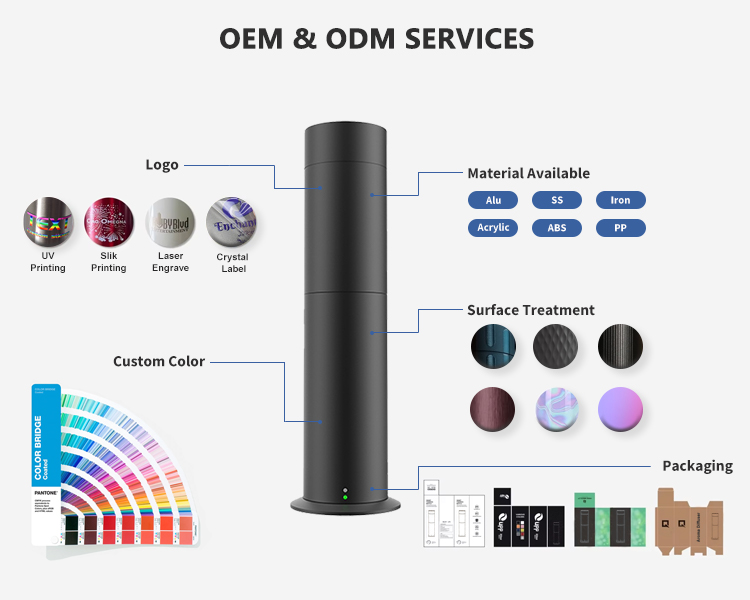
      For businesses seeking tailored aroma solutions—whether for a home scenting machine, commercial scent Diffuser Machine, or usb car diffuser—partnering with a reliable OEM factory is critical. Below is a detailed breakdown of the customization process, optimized for quality, compliance, and cost efficiency.     1. Requirements analysis and design planning   a. Define Product Type & Functionality   Commercial vs. Home Use: Commercial aroma diffuser (e.g., hotels, spas): Prioritize large capacity (200 ml or more), durability, and intelligent control (e.g., timing operation). Home electric scent diffuser: focus on compact size, silence noise(≤32 dB) and aesthetic design (e.g. RGB lighting). Customized features: Include scent selection (floral, woody), remote control (apps/Bluetooth), and advanced atomization technology (ultrasonic or dry-mist).   b. Material and Design Specifications   Environmentally Friendly Materials: Use non-toxic metals (steel, aluminum) or BPA-free plastics. Aesthetic Customization: Fashion, modern design.   2. Compliance certification   a.International Standards   ROHS Certification: Mandatory for the EU market to ensure the absence of hazardous substances (e.g. lead, mercury). Process includes material testing and document review (5-7 days). ETL Certification: Required for North America, including sample testing (4-6 weeks) and factory audit.   b. Enterprise Standard Filing   If there is no applicable national/industry standard, submit product specifications, manuals and business license for approval (5-7 business days).   3. Prototyping & Production   a. Prototype Testing   Performance Metrics: Atomization consistency (e.g., 3.0MHz ultrasonic frequency). Noise levels (e.g., ≤32 dB for home models). Durability testing (e.g., 8-hour continuous operation for commercial units).   b. Quality Assurance   Material Screening: Verify flame retardancy (e.g., copper wiring) and endurance. Production Monitoring: Multi-process monitoring data to ensure product stability.   4. Logistics and shipping integration   a. Branding and Packaging   White Label Service: Add logo through screen printing/laser engraving. Sustainable Packaging: Selection of biodegradable materials.   b. Global Transportation Solutions   We can offer EXW, FOB, CIF, CFR, DAP, DDP and other trade terms.   5. After-Sales Support & Continuous Improvement   a. Warranty & Maintenance   Offer 1-year warranties and rapid troubleshooting service Provide user manuals.   b. Innovation & Market Adaptation   Track trends like eco-friendly formulas or smart-home integration.   Customizing an electric scent diffuser involves demand analysis → certification → prototyping → production → logistics optimization. Prioritize factories with robust compliance (ROHS/ETL), stringent quality control, and production timeliness capabilities. If you have customized needs you can contact us. We specialize in customized production of aroma scent diffuser with 10 years of experience.  
    View More
  • What are the Advantages of Car Aroma Diffuser over Traditional Aromatherapy Products?
    What are the Advantages of Car Aroma Diffuser over Traditional Aromatherapy Products?
    Mar 10, 2026
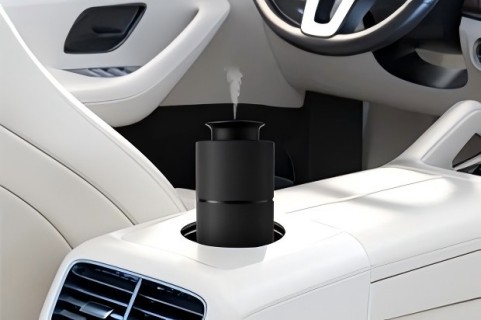
      The high-temperature confined characteristics of the car space, so that the traditional aromatherapy alcohol volatilization, artificial flavor exposure, and other issues are infinitely amplified. A third-party testing agency's data show that the concentration of benzene in the car after summer exposure can be up to 3-8 times the daily limit, and the phthalates contained in ordinary aromatherapy will be superimposed with the pollution.   In the pursuit of health and quality of driving era, traditional aromatherapy products have been difficult to meet the needs of car owners for safety, convenience and intelligence. With its innovative technology, the waterless aroma diffuser has become the preferred solution for a new generation of in-vehicle air management. The following are its significant advantages over conventional aromatherapy:   1.Safety and health: Say goodbye to chemical hazards and guard the safety of breathing   Alcohol-free formula: traditional liquid aromatherapy often contains alcohol, high temperature exposure is prone to cause safety hazards, while oil-free aromatherapy diffusers mostly use nano-mist technology to avoid the risk of flammability, especially suitable for summer use.   Natural ingredients certification: high-quality oil-free scent diffusers with plant essential oils (such as lavender, cedar), and through the IFRA, SGS and other international safety certifications, to avoid artificial flavors, phthalates and other harmful substances. It can also be used by pregnant and infant families with peace of mind.   Corrosion-resistant and durable material: made of metal or corrosion-resistant PP material, does not release BPA and other toxins under high temperature, more reliable for long-term use.   2. Intelligent and efficient: precise control of flavor to enhance the driving experience   Intelligent sensing: car aromatherapy machine supports automatic operation when the car starts and sleep when the car stops.   Nano-scale atomization technology: Through high-frequency vibration, the essential oil is broken down into nano-sized aerosol, which evenly spreads to the whole car and quickly neutralizes the odor molecules.   Enhanced Driving: Studies show that using water-less car aromatherapy machine improves driver reaction time by 19% and reduces accidents by 37%.   3. Durable and economical: long life and reduced frequency of replacement   Large capacity battery with low consumption design: such as a Portable Car & Home Aroma Diffuser HYS-40N built-in 1000mAh lithium battery, up to 15 days of battery life.     Efficient utilization of essential oils: Nano atomization technology allows 20ml of essential oils to last for months, saving on replacement costs compared to traditional balm or reed diffuser.   4. Space friendly: small and exquisite, suitable for many occasions   Embedded design: compact body, can be embedded in the cup holder or pasted in the center console, does not block the line of sight or take up storage space, compared to the table aromatherapy, safer and more stable   Multi-occasion application: support car, home, office, multi-occasion switching.   5. Aesthetics and Personalization: Creating an Exclusive Mobile Fragrance Space   Minimalist design: metallic, streamlined styling blends well with the car's interior. A variety of fragrance options: users can change the essential oil with the season, mood, or to meet personalized needs.   The waterless car aroma diffuser surpasses traditional aromatherapy products in all aspects, with the advantages of safety, intelligence, and durability. It is not only an air purification tool, but also a technological companion to enhance driving safety and quality of life.   Ready to redefine your mobile fragrance experience? Explore our full collection of Intelligent Car Aroma Diffusers and discover how the HYS-40N and other professional-grade systems prioritize your safety and comfort on the road.
    View More
  • Two Fluidity Atomization Technology Influence On Scent Diffuser Machine Market
    Two Fluidity Atomization Technology Influence On Scent Diffuser Machine Market
    Mar 10, 2026
      The market for aroma diffuser machines, also known as scent diffuser machines, is experiencing significant growth and holds promising prospects for the future. This growth can be attributed to several factors, including the rising demand for essential oil diffusers, advancements in technology, and the increasing focus on wellness and home decor. Rising Demand for Wellness and Aromatherapy   One of the primary drivers of the aroma diffuser market is the growing interest in aromatherapy and its associated health benefits. Consumers are increasingly seeking natural ways to improve their well-being, and essential oil diffusers provide a convenient means to achieve this. These devices are used to create relaxing, energizing, or focused environments, which can help reduce stress, improve sleep quality, and enhance mood. As a result, the essential oil diffuser machine market is projected to reach approximately $4.5 billion by 2032, up from $2.1 billion in 2023.     Technological Advancements   Technological innovations have played a crucial role in the evolution of aroma diffuser machines. Modern diffusers incorporate features such as smart connectivity, allowing users to control the devices remotely via mobile apps or voice commands. This integration of technology enhances the user experience and offers more personalized and efficient scenting solutions. For instance, some advanced air aroma diffuser machines can adjust scent intensity based on environmental factors and even learn user preferences over time. These innovations make aroma diffuser machines more appealing to tech-savvy consumers and expand their functionality in both residential and commercial settings.   Growing Popularity of Smart Homes   The rise of smart home systems has further boosted the demand for scent diffuser machines. Consumers are increasingly integrating these devices into their home automation systems, enabling seamless control and convenience. This trend is particularly strong in regions like North America and Europe, where the adoption of smart devices is high. As a result, aroma diffuser machines are becoming essential components of smart home setups, contributing to their growing popularity in the market.   Addressing the market's focus on aesthetics and sustainability, the Aluminium Alloy Business Scent Diffuser with Bluetooth App HYM-1001F features a high-grade Aluminium Alloy housing that is both recyclable and corrosion-resistant. This unit represents the perfect fusion of Two-Fluidity technology and sophisticated design, delivering a signature scent that enhances brand identity in luxury hotels and corporate offices. Expanding Applications in Various Industries   The applications of fragrance diffuser machines are not limited to residential use. They are also gaining traction in commercial sectors such as retail, hospitality, and corporate offices. Businesses are recognizing the power of scent marketing to create memorable experiences for customers and enhance brand identity. For example, hotels and spas use sophisticated fragrance diffuser systems to cultivate a distinctive ambiance that resonates with their brand image and improves customer satisfaction. This commercial adoption has driven the development of more advanced, large-scale diffuser systems capable of covering expansive areas and integrating with existing HVAC infrastructure. Environmental and Design Considerations   Environmental sustainability is another factor influencing the market for aroma diffuser machines. Consumers are increasingly seeking eco-friendly products, and manufacturers are responding by developing diffusers that consume less power, utilize recyclable materials, and offer refillable options to reduce waste. Additionally, there is a growing emphasis on design aesthetics, with manufacturers creating visually appealing diffuser designs that can complement various home and office styles. This focus on sustainability and design has made essential oil diffuser machines more attractive to environmentally conscious and design-conscious consumers.   Challenges and Opportunities Despite the positive outlook, the market for air aroma diffuser machines also faces some challenges. High initial costs for advanced diffuser systems may deter price-sensitive consumers, particularly small and medium-sized businesses. Furthermore, the complexity and maintenance requirements of these machines can pose a barrier, as specialized knowledge is often needed for proper upkeep and operation. However, these challenges also present opportunities for innovation and differentiation. Manufacturers can focus on developing cost-effective, user-friendly diffusers with enhanced features to cater to a broader range of consumers. The market for aroma diffuser machines is poised for continued growth due to the increasing demand for wellness products, technological advancements, and expanding applications in various industries. As consumers become more health-conscious and seek natural ways to improve their living environments, essential oil diffuser machines will likely remain a significant player in the market. With ongoing innovations and a focus on sustainability and design, the future of fragrance diffuser machines looks promising, offering numerous opportunities for both manufacturers and consumers alike.   Want to stay ahead of the Two-Fluid Atomization Diffuser? Visit our homepage to explore how our cutting-edge scent diffuser machines are redefining wellness and commercial branding for the global market."  
    View More
Sign Up To Get Latest Update

leave a message

leave a message
If you are interested in our products and want to know more details,please leave a message here,we will reply you as soon as we can.
submit

Home

Products

WhatsApp

contact